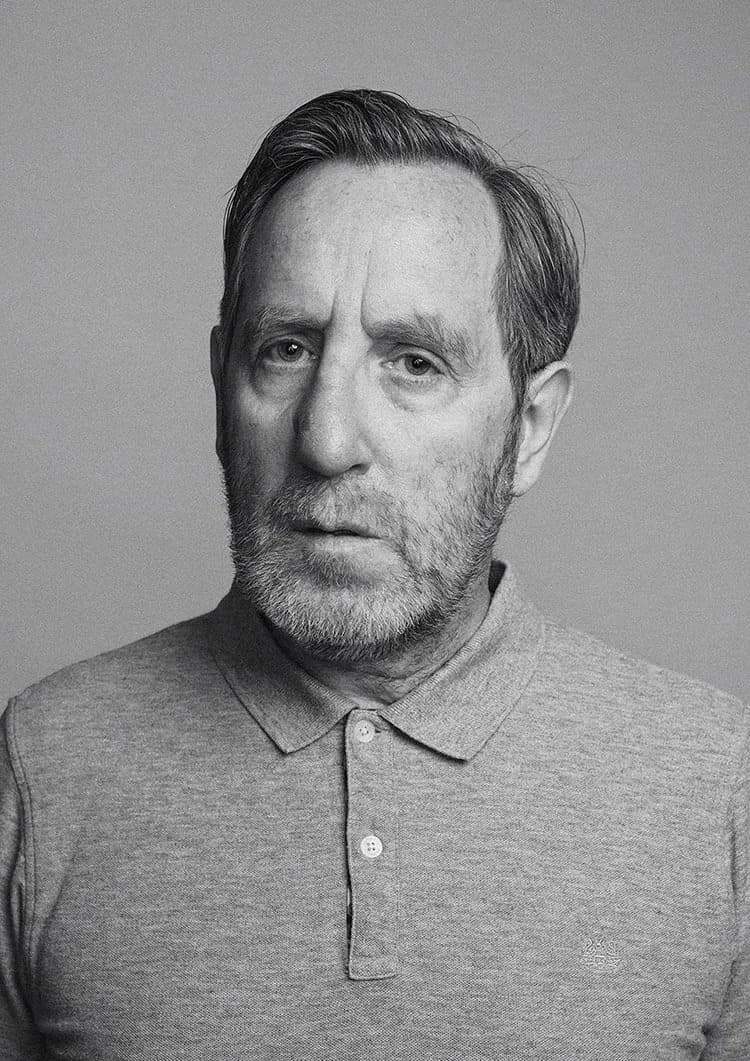
What Do Casting Directors Actually Look for in Actor Headshots?
Your headshot is the first audition. Before you are in the room, before you have said a single line, casting directors are scrolling through hundreds of images in a few seconds. They are asking themselves a single question: "Could this person be the character I am casting?"
I have photographed actors for more than eight years and work on film and TV sets as a unit stills photographer, and the same few things decide whether a headshot gets a call or gets passed over. It is not about being the most beautiful or the most polished. It is about authenticity, clarity, and personality. Let me walk you through what actually matters.
Authenticity: The Foundation of Every Great Headshot
This is the most important point: your headshot should look like you on a good day, not a fantasy version, and not a washed-out version.
Casting directors want to know what walks through the door. If you come in looking significantly different from your photo, they feel misled. The audition starts in a deficit. They are checking you off the list rather than giving you a fair shake.
This does not mean your headshot cannot be flattering. It absolutely can be. Good lighting, good direction, subtle retouching, nice clothes, all of that enhances your actual self. But it should not transform you.
When I shoot headshots, I am capturing the real you, enhanced. Not a version of you that lives only in Photoshop.
Eyes and Expression: Where All the Power Is
Here is a truth that might surprise you: casting directors are looking at your eyes.
A strong headshot has life in the eyes. There is thought behind them. The expression reads as authentic, as if you are thinking about something or feeling something, not just staring at a camera.
"Dead eyes" is the phrase you will hear for the opposite. The eyes are technically correct, they are in focus, they are looking at the camera, but there is no interior life. This happens when someone is too stiff, too self-conscious, or has lost focus. An AI-generated photo often has this problem.
When I am directing a headshot session, I am constantly coaching toward that interior life. "Think about the last time you felt proud." "Imagine someone just told you good news." These are not prompts for an emotion you perform; they are anchors to get you thinking. When you are genuinely thinking, your eyes light up.
Casting Type Clarity: What You Suggest Without Words
Here is something that is hard to articulate but easy to feel: your headshot should suggest what you could be cast as, without being costumey.
If you are a corporate type, that should read in your clothing, your posture, your energy, but you are not wearing a full suit jacket and tie (unless that is contextually right). If you are a bohemian type, there is a relaxation, a natural ease, but you are not in full costume.
It is a vibe, not a costume. The best casting headshots let directors imagine you in different roles by the inherent sense of who you are. Are you authoritative? Vulnerable? Playful? Approachable? Your headshot should make one of those things clear without limiting you to a single type.
Technical Quality: The Basics That Enable Everything Else
You can have all the authenticity and personality in the world, but if the technical basics are wrong, the image does not work.
Sharp focus on your eyes. If your eyes are not tack-sharp, the entire shot is compromised. This is non-negotiable. Everything else can be slightly softer, but your eyes must be sharp.
Good lighting. Professional lighting reveals the shape of your face and makes your skin look clear. Bad lighting flattens you, creates harsh shadows, or makes skin texture prominent.
Clean background. The background should recede. It should not distract. Plain backgrounds are standard for this reason, they are simple and they allow your face to be the focus.
Professional retouching. Your skin should look like your skin, not painted on. Even out tone, remove temporary blemishes, sharpen the eyes. Do not airbrush. The goal is to show you at your best, not a version of you that does not exist.
What Turns Casting Directors Off
Over-Retouching
When you can see that retouching has happened, skin that is too smooth, pores entirely erased, features that look digitally altered, casting directors are taken out of the moment. They are thinking about Photoshop instead of thinking about you for the role.
Photos That Do Not Match You
If you have changed significantly since the photo was taken, the entire thing is compromised. You are misrepresenting yourself.
Heavily Stylised or Artistic Shots
There is a difference between a professional headshot and a portrait. An artistic photo prioritises aesthetics, interesting composition, unusual angles, creative lighting. A headshot prioritises casting utility. It is boring on purpose. That boredom is the point; it gets out of the way so casting directors can see you.
Distracting Backgrounds
If the background is busy, if there is a landscape or a textured wall, it pulls focus. Simple, neutral backgrounds work. Some headshots use environmental context, and that can work, but it has to be intentional and subtle. Most of the time, a simple background is best.
Current Trends in Professional Headshots
The headshot aesthetic has shifted in the last five years, and it has shifted toward the natural.
Not long ago, highly polished, heavily retouched, studio-perfect headshots were common. Now, the trend is toward more natural, less retouched images. Natural lighting is popular, not phone-light-natural, but professional lighting that reads as natural rather than studio-lit. Minimal retouching. Authentic expression.
This has actually changed what a "professional" headshot looks like. It is less perfect and more real. And that shift makes sense because casting directors want to see the actual person, not a fantasy version.
Spotlight, Mandy, and Submission Tips
If you are submitting to professional casting services like Spotlight, Mandy, or Casting Call Pro, there are technical requirements:
Resolution: These platforms require high-resolution images. DPI does not matter for a digital file; pixels do. Spotlight asks for at least 500 by 500 pixels and a file of 1MB to 40MB, and any professional headshot is well above that.
Primary vs. secondary headshots: Most platforms let you upload multiple headshots. Your primary should be your strongest image, the one that best represents your casting type. Secondary headshots should show you differently (different outfit, different energy, different look). Casting directors might skip the secondary, but having options is good.
How many to upload: Two or three headshots is typical. More than that, and people stop looking.
If you are ready to get professional headshots that capture your authenticity and clarity, explore actor headshot packages. The session is collaborative; I will direct you toward that interior life and personality that makes headshots work. If you have questions about your casting type, get in touch. And when you are ready to book, head to our contact page.